Your STNK is the small paper that proves your motorcycle or car is registered, and it has a way of expiring right when life is busy. One day you notice a date, a friend mentions a five-year check, and suddenly you are wondering which documents to bring, whether the bike must come along and how much it will all cost. Sound familiar?
The good news is that renewal is not mysterious. There are two different jobs: a yearly validation, which is quick, and the five-year renewal, which is more involved and includes a physical check of your vehicle. Mixing them up is the most common reason people make a second trip to the Samsat office.
This guide explains both jobs in plain words, using official police and government sources. Rules, fees and local procedures change, and offices differ by region, so use this as a guide and confirm details with your local Samsat before you go. We do not give legal advice, and we do not quote unofficial fees. Where we mention amounts, we say which source they come from and when.
Key Takeaways:
- STNK is valid for five years, and each extension requires a physical check of the vehicle, according to the Korlantas Polri STNK guide.
- For the yearly validation, the Traffic Corps said in November 2025 that only the ID card, the original STNK and a power of attorney if represented are needed, with no BPKB, as the Indonesian National Police article on annual STNK validation reports.
- The fifth-year renewal must be done in person at Samsat, with the BPKB, the vehicle and identity documents, per the same source.
- ANTARA reports that there is no separate fee for the physical check, but other official charges still apply, in its ANTARA News report on five-year STNK costs.
- Fees and procedures vary, so check with your Samsat or official channels before you go.
What an STNK Is and Why Renewal Has Two Steps
Before the steps, a quick look at what the document does and why the system asks you to renew it in two different ways.
What the STNK proves
The Korlantas guide defines STNK, short for Surat Tanda Nomor Kendaraan, as proof of registration and validation of a motor vehicle based on its registered identity and ownership. It is issued through Samsat, the one-stop office run by three bodies: the police, the provincial revenue agency and PT Jasa Raharja. The STNK lists the owner’s identity and the vehicle’s details, such as the plate number, brand, model, year, engine size, chassis number and engine number.
In plain terms, it connects a person, a vehicle and a plate. That is why officials care about matching the numbers on paper with the numbers on the machine.
Yearly validation versus the five-year renewal
The Semarang city information office explains that renewal splits into two types. The yearly tax is only a validation of the STNK, and it can be done at the main Samsat, a branch outlet, a mobile Samsat or online, depending on the region. The five-year tax, which comes with a new plate, requires a physical check and can only be done at the main Samsat office in Semarang. Other cities may arrange things differently, so ask your local office.
| Item | Yearly validation | Five-year renewal |
|---|---|---|
| What it does | Validates the STNK and pays yearly tax | Renews the STNK and issues a new plate |
| Physical check of vehicle | Not required, according to the sources above | Required |
| Where | Several channels, depending on region | Main Samsat office |
| BPKB | Not needed for the same owner | Needed in person |
Why the physical check exists
The Traffic Corps explained that the check confirms the engine and chassis numbers to prevent fraud and document misuse. A police officer compares the numbers stamped on the vehicle with those in your documents. If they match, the process moves on. If not, you will need to sort out the mismatch before renewing.
The rules behind it
The police statement says the directive is based on Law No. 22 of 2009 on Road Traffic and Transportation and National Police Regulation No. 7 of 2021 on Motor Vehicle Registration. Laws and regulations can be updated, so if you read an older blog post or social media video, double-check it against a current official source. Older instructions, including some posts written years ago, may describe requirements that have changed.
One example is the BPKB. For years, many people brought the BPKB, the vehicle ownership document, to every yearly validation. According to the police statement in November 2025, the BPKB is valid once for each ownership, so as long as the vehicle has not changed hands, you do not need to bring it for the yearly validation.
The takeaway is simple: know which job you are doing, bring the documents for that job and check the date of any advice you read. We cover each job step by step below.
Two more things are worth knowing. First, a vehicle that is registered in one area and used in another still follows the registering area’s rules for the five-year renewal, so ask the Samsat where your plate was issued. Second, keep your documents together in one folder, because misplaced papers are the number one reason a short errand turns into a long one. If you are managing errands like this on your phone, our notes on getting more done from your phone may help you stay organized.
Yearly Validation: Documents and Steps
The yearly validation is the short version. If you are in your first four years after a registration, this is the job you will do most often.
What to bring
According to the Indonesian National Police article on annual STNK validation, motorists may validate their STNK at local Samsat offices or through the official SIGNAL app, and in both cases only the ID card, the original STNK and a power of attorney if someone else is doing it are required. The Semarang information office lists similar items: the original STNK, the original ID card that matches the owner’s name, and a stamped power of attorney with a copy of the representative’s ID card if the owner cannot attend. It adds that for the yearly tax, a copy of the BPKB is enough, while the 2025 police statement says the BPKB is not needed for the same owner, so ask your local office what it currently wants.
- Original STNK.
- Original ID card (KTP) with the same name as the owner on the STNK.
- A stamped power of attorney and a copy of the representative’s ID, if someone goes for you.
- Any blocking release letter, if your STNK is blocked, as the Korlantas guide notes for validation.
Where to go
The Semarang page lists the main Samsat office, outlets in shopping or public areas, mobile Samsat units, and online options for the yearly tax. Not every region has every channel, and schedules for mobile units change. Check the official channels of your regional Samsat for current locations and times.
Simple steps
- Check your due date on the STNK and plan to go before it passes.
- Prepare the documents listed above.
- Choose a channel that your region offers: the office, an outlet, a mobile unit or the official online option.
- Follow the officer’s instructions, pay the amount shown by the official system and keep the receipt.
- Check that the new validation is recorded on your STNK before you leave.
Avoid common mistakes
- Do not assume a channel is available in your area without checking.
- Do not pay anyone who offers a shortcut without an official receipt.
- Check that the name on your ID matches the name on the STNK.
- If the STNK is blocked, ask the office how to lift the block before you pay.
- Keep digital and paper copies of receipts.
If someone goes on your behalf, give them the stamped power of attorney and a copy of your ID, and make sure they know exactly which job to do. A representative who arrives without the right paper can be turned away, and you will have wasted a morning.
Online tools can save time, but use only official apps and sites. The INP article names the SIGNAL app as an official route. Be careful with unofficial sites and messages that promise faster processing for a fee. If you are unsure, call or visit the Samsat office and ask.
Finally, do not wait until the last day. Offices have queues, systems can be slow and public holidays shorten your options. A week of margin turns a stressful errand into a boring one, which is exactly what you want from paperwork.
Five-Year Renewal: Steps and Required Papers
The five-year renewal is the full version. It includes the physical check, a new STNK and a new license plate, so give it more time.
Required documents
The Riau Islands Police page lists what to prepare before you go to the physical check counter: the original STNK, the original ID card matching the owner’s name on the STNK, and the original BPKB. The Korlantas guide describes the same renewal requirements in more detail: a registration form, proof of identity, the STNK, the BPKB and its copy, a statement from the lender with a stamped letter if the BPKB is held as loan collateral, a blocking release letter if the STNK is blocked, and the result of the physical check. ANTARA reports that Korlantas lists original and photocopied STNK, BPKB and ID card, plus the vehicle itself.
| Item | Notes |
|---|---|
| Original and copy of STNK | Bring both |
| Original and copy of BPKB | If the BPKB is with a lender, bring the lender’s letter as the Korlantas guide describes |
| Original and copy of ID card | Name must match the owner on the STNK |
| The vehicle | For the physical check of chassis and engine numbers |
| Power of attorney | Stamped, if someone else goes for you |
The steps in order
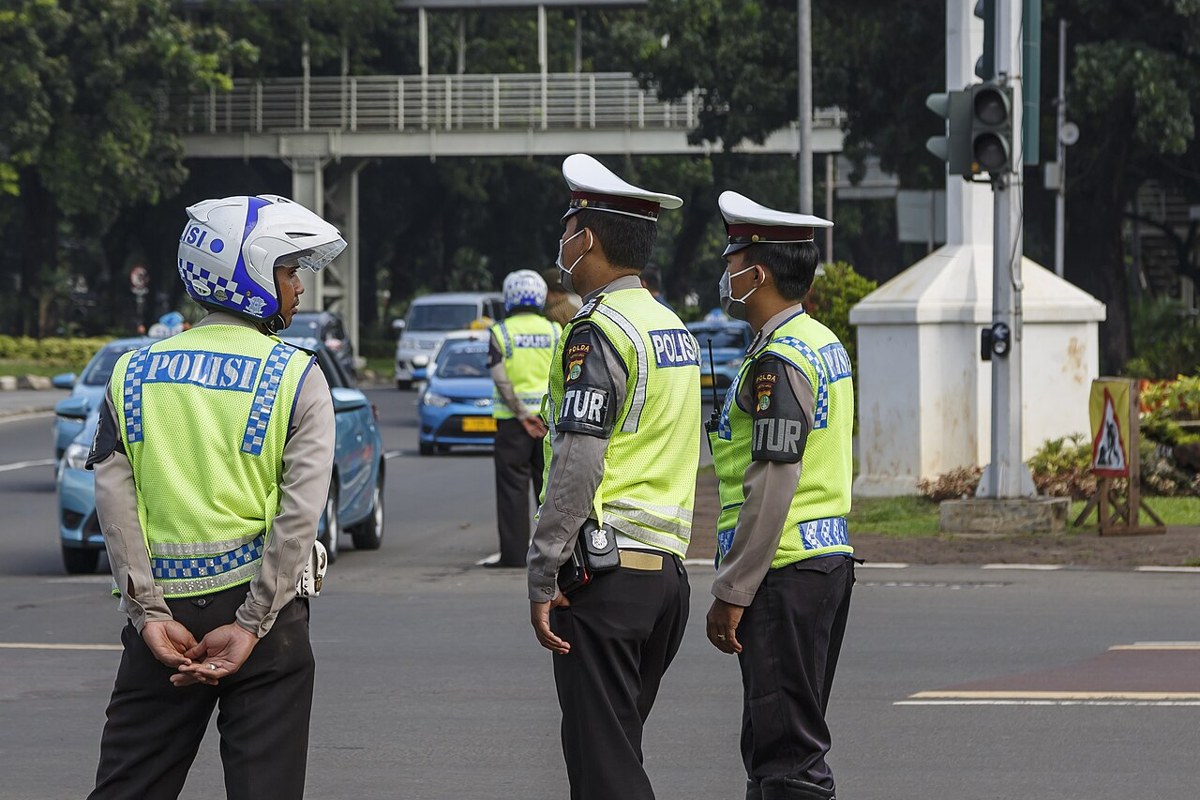
The Riau Islands Police page gives this order: physical check of the vehicle, validation of the check result, filling in the renewal form and the tax return form, registering at the five-year STNK counter, paying the tax and collecting the new STNK and number plates.
- Take the vehicle to the physical check area, where officers check the chassis and engine numbers.
- Have the result validated.
- Fill in the renewal form and the tax form.
- Register at the five-year STNK counter and hand in your documents.
- Pay the amounts due.
- Collect your new STNK and new plates.
Where to do it
The Semarang page states that the five-year renewal can only be done at the main Samsat office, not at outlets or mobile units, which only handle the yearly tax. Check with your own Samsat which office handles your plate. The Traffic Corps also stressed that owners must come in person for the fifth-year renewal, bringing the BPKB, the vehicle and identity documents.
Tips for a smooth visit
- Go early in the day, since queues grow later.
- Clean the area around the chassis and engine numbers so officers can read them.
- Check that the numbers on your STNK and BPKB match the vehicle before you travel.
- Bring copies, a pen and a folder.
- Ask for the official receipt for every payment.
If your BPKB is held by a lender, ask them well before the date what paper they need to give you. That letter can take days. Starting early saves you a second trip.
If your documents show a mismatch, such as a different spelling or number, do not try to fix it on the day by unofficial means. Ask the officer what correction process applies, and follow that. A small error is common and fixable, but only through the proper channel.
Plan the day around the physical check, since it is the step that cannot be skipped. If the vehicle is a motorcycle, ride it there and park where officers direct you. If it is a car, make sure it has enough fuel and that the number plates are not hidden under dirt or stickers. A vehicle that cannot be inspected properly is a vehicle that cannot be renewed that day, so a quick wipe of the chassis and engine number areas is time well spent.
Costs: What Is Official and What to Watch For
Money is where most worries sit. Let us separate what the sources say from what you may hear from other people.
No separate fee for the physical check
ANTARA reported on 20 September 2026 that there is no inspection fee or separate rate for the physical check done by police as part of the five-year renewal. It adds that the whole renewal is not free, because owners still pay official charges that arise during re-registration, such as issuing the STNK and the number plates, vehicle tax and other obligations as the rules require.
Police service charges
The same report says that the types and rates of non-tax state revenue for police services are set by Government Regulation No. 76 of 2020, and that it was still in force at the time. According to ANTARA, the STNK issuance rate is Rp100,000 for two- and three-wheeled vehicles and Rp200,000 for vehicles with four or more wheels. The number plate issuance rate is Rp60,000 per pair for two- and three-wheelers and Rp100,000 per pair for four or more wheels.
| Item (per ANTARA, Sept 2026) | Two- or three-wheelers | Four or more wheels |
|---|---|---|
| STNK issuance | Rp100,000 | Rp200,000 |
| Number plates (per pair) | Rp60,000 | Rp100,000 |
These are police service charges only. ANTARA says they are different from the annual vehicle tax and the mandatory traffic accident fund contribution, SWDKLLJ, which depend on your vehicle and region. So the total you pay on the day will be higher than the table above. Rates can change, so ask the Samsat for the current total before you go.

Beware of unofficial charges
ANTARA advises owners to know the difference between official fees and charges that are not in the rules. If someone asks for a payment with no clear basis or breakdown, you can ask the Samsat officer to explain the type of service and the rate. Ask for an official receipt every time. A brief, polite question is usually enough.
A budget checklist
- The yearly tax and fund contribution for your vehicle, which the official system will show.
- The STNK issuance charge for the five-year renewal.
- The number plate charge for the five-year renewal.
- Any arrears, if you paid late.
- Travel, parking and time off work.
Plan a little extra for travel and waiting. If you are visiting from out of town, such as for Batam, you might even combine the trip with a good meal, as in our Batam local food guide.
Keep your money plan simple. Ask the Samsat for the full amount before you queue, pay only the amounts shown by the official system and keep every receipt. If the total looks very different from what you expected, ask for a breakdown by item: STNK, plates, vehicle tax, the mandatory fund and any arrears. A clear breakdown is a good sign, and a vague answer is a reason to ask a supervisor.
It also helps to separate one-time costs from yearly ones. The plate and STNK charges come with the five-year renewal, while the yearly tax comes every year. Many owners set aside a small amount each month so that the five-year renewal does not feel like a surprise. A simple note in your phone with the due date and the amount you plan to save is enough.
If you renew late, expect extra charges on top of the normal ones, and ask the office how they are calculated. Late payment is the most avoidable cost of all, which is one more reason to set that reminder today.
Common Problems and How to Handle Them
Not every renewal goes to plan. Here are the situations people run into most, with sensible first steps based on the official guidance. Your local office has the final word.
Lost or damaged STNK
The Korlantas guide lists what is needed to replace a lost STNK: a registration form, proof of identity, the original BPKB and a copy, a stamped statement from the owner about the loss, a loss statement from the Regident unit that issued the STNK, and the physical check result. For a damaged STNK, the list is similar without the loss statement from the police unit. Start at your Samsat to get the right forms.
Blocked STNK
The guide says a blocking release letter is needed if the STNK is in blocked status. If you suspect a block, ask the Samsat to check before you spend time on the rest. Blocks can have different causes, and the office can tell you what applies.
BPKB held by a lender
If your BPKB is used as collateral for a loan, the Korlantas guide says you must bring proof of the collateral arrangement and a stamped statement from the lender. Contact the lender early, and ask how long the letter takes.
Someone else going for you
Both the Korlantas guide and the Semarang page mention a stamped power of attorney. Include a copy of the representative’s ID. Remember, the fifth-year renewal needs the vehicle itself, and the Traffic Corps said owners must come in person, so a representative may not be enough for that step. Ask the office before sending someone.
Keep records and protect yourself
- Photograph your STNK and keep the images safe, but do not share them publicly, since they show personal details.
- Save every receipt and keep them in one folder.
- Use only official apps and offices.
- Set a reminder a month before expiry.
- If something feels wrong, stop and ask a supervisor at the office.
Most renewals are boring in the best way. You show up, the numbers match, you pay and you leave with a new STNK. The preparation is what makes it boring, so spend ten minutes now checking your dates, documents and the official source for your region.
This guide is general information from public sources and does not replace the advice of the Samsat or a legal professional.
Mistakes in personal details are another common snag. If your name, address or the numbers on your documents are spelled differently across papers, ask the office which correction process applies before you start the renewal. Fixing it first prevents a rejected application later.
If you have recently bought the vehicle second-hand, check that the ownership has been transferred into your name before renewing. The Korlantas guide notes that a change of owner on the STNK carries a transfer fee called BBN-KB, so the transfer is a separate job from renewal.
Finally, be patient with the process and polite with the staff. Samsat officers handle many cases a day, and a calm, well-prepared visitor often moves through faster than someone who arrives with missing papers and a short temper. Prepare, check, ask and keep the receipts, and you will be done sooner than you think.
If you move to another region, ask the Samsat where your vehicle is registered about the steps for changing registration, since rules for moving a vehicle between regions differ from a normal renewal. Do not assume that a plate from one city can be renewed anywhere, and never pay for a service that cannot give you an official receipt.
Frequently Asked Questions
How long is an STNK valid?
Five years, according to the Korlantas guide. Each extension requires a physical check of the vehicle.
Do I need the BPKB for the yearly validation?
According to the Traffic Corps in November 2025, no, as long as the vehicle has not changed owners. Your local office may have its own practice, so check.
Is the physical check free?
ANTARA reports that there is no separate fee for the check, but other official charges apply to the renewal.
Can someone else renew for me?
For the yearly validation, yes with a stamped power of attorney. For the fifth-year renewal, the Traffic Corps said owners must come in person.
Final Thoughts
Know which job you are doing: a quick yearly validation or the fifth-year renewal with a physical check. Bring the right documents, expect official charges and confirm details with your Samsat.
Take a photo of your STNK expiry date today and set a reminder for a month before it.